In the world of digital marketing, Social Bookmarking has become the new norm. The internet plays home to tons of social bookmarking sites. This has come as a boon for ambitious businesses as they can use them for effective organic growth.
So how do websites actually use social bookmarking in their favor? Firstly, all they have to do is bookmark their web pages on top dofollow bookmarking sites for revisiting later. The process creates a good network of backlinks that helps a page’s performance. This is especially true if you use a high DA social bookmarking sites list. Choosing your bookmarking sites effectively will increase your SERP rankings as well as domain authority.
❤ Sign In --> Go to my Articles and promote your Submission
Introduction
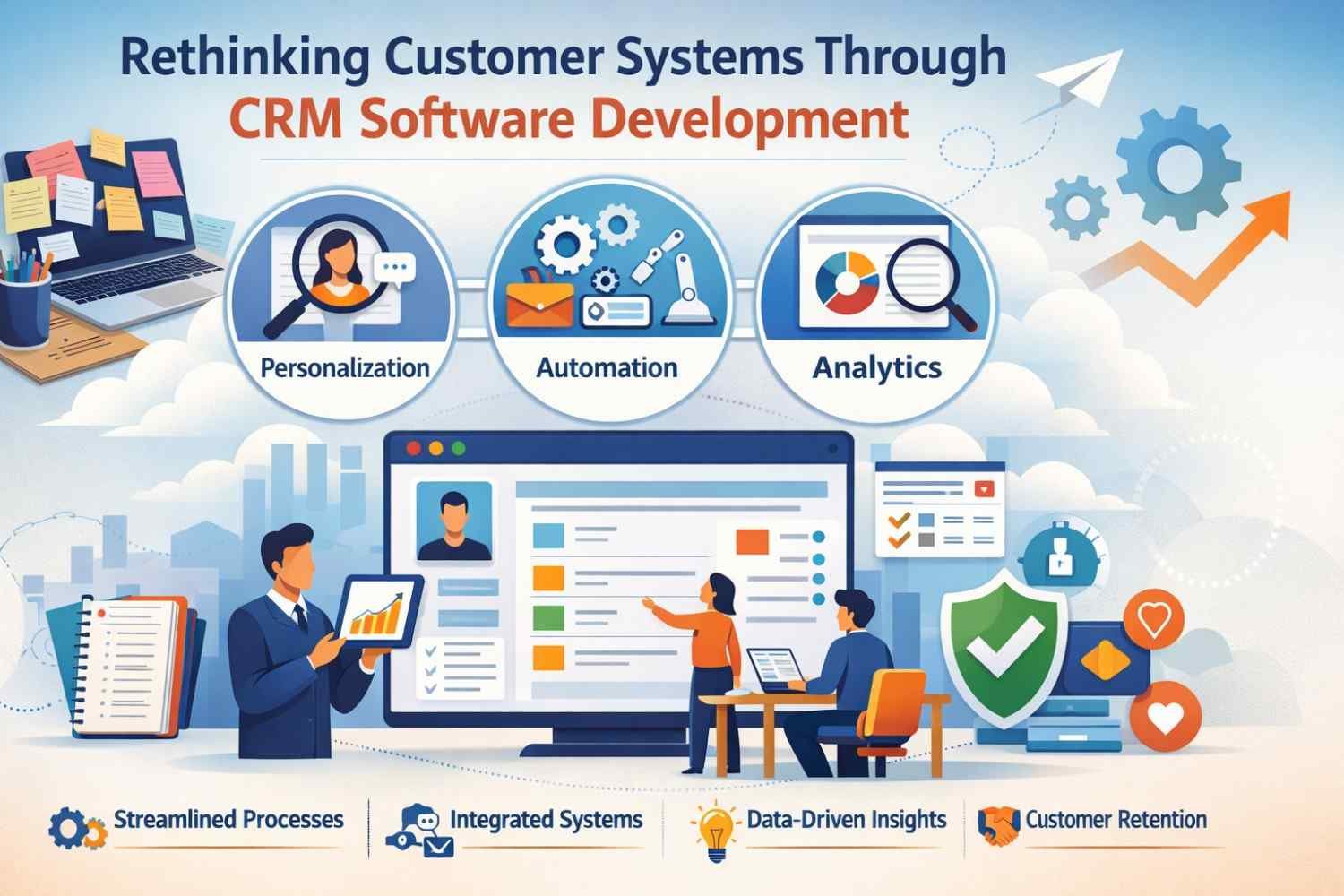
Customer systems once felt like a necessary evil, useful in theory, frustrating in practice. Contact details lived in spreadsheets, conversations vanished into inboxes, and context was something teams reconstructed from memory. As businesses grew, those patchwork systems quietly became bottlenecks. Expectations changed, customers became louder and faster, and suddenly “good enough” stopped being good at all. This shift explains why organizations are rethinking how customer relationships are managed. CRM software development isn’t about replacing tools anymore—it’s about replacing assumptions. The idea that customer data should be scattered feels outdated, almost nostalgic, like fax machines and shared passwords.
The Problem with Legacy Customer Systems
Legacy customer systems weren’t designed for today’s business pace. Data silos, manual updates, and limited visibility create friction between teams that should be aligned. Sales tracks one version of the customer, support sees another, and marketing fills the gaps with educated guesses. A familiar scene emerges: meetings spent debating whose data is correct instead of acting on insights. CRM Software for Businesses addresses this fragmentation by centralizing information and making it usable. The real issue isn’t old technology—it’s the cost of continuing to rely on systems that no longer reflect how customers behave.
Changing Customer Expectations in a Digital-First World
Customers no longer compare experiences only within an industry—they compare them everywhere. A smooth ecommerce interaction becomes the benchmark for B2B onboarding, support responses, and follow-ups. Speed, personalization, and consistency are expected, not celebrated—systems built for another era struggle to keep up with this reality. Modern CRM platforms help businesses respond in real time, remember preferences, and anticipate needs instead of reacting late. This shift isn’t driven by trends but by survival. When customer patience shrinks, the systems supporting those relationships must evolve just as quickly—or risk becoming invisible.
The Strategic Shift Toward Custom CRM Solutions
Off-the-shelf tools promise quick fixes, but rarely fit how businesses actually operate. Processes differ, teams scale unpredictably, and customer journeys rarely follow templates. That’s where custom CRM approaches gain traction. Working with a CRM development company allows systems to be shaped around real workflows instead of forcing teams to adapt to software limitations. Flexibility becomes the advantage—features grow with the business, integrations feel intentional, and data flows naturally. The conversation shifts from “How do teams work around the tool?” to “How does the tool support growth?” That change alone justifies the rethink.
CRM Software as a Growth Enabler (Not Just a Database)
Treating CRM as a static database limits its potential. Modern systems actively support revenue growth, customer retention, and operational clarity. Sales forecasting improves, marketing campaigns become measurable, and customer interactions feel less transactional. Teams stop chasing information and start using it. The difference is subtle at first, then obvious. CRM development transforms customer systems into living platforms that evolve alongside strategy. Growth no longer feels chaotic—it feels structured. When everyone works from the same source of truth, alignment happens naturally, without endless follow-ups or duplicated effort slowing progress.
Data-Driven Decision Making Becomes the New Default
Decisions based on instinct have their charm, but scale demands evidence. Unified CRM systems turn scattered interactions into meaningful insights. Patterns emerge, opportunities become visible, and risks surface earlier. Dashboards replace guesswork, and reports finally tell a coherent story. This shift changes how leaders think—not just what they decide. Instead of asking, “What happened?” teams ask, “What’s next?” CRM Software for Businesses enables this transition by making data accessible and actionable. The result isn’t more information—it’s a clearer direction, delivered at the moment it actually matters.
Integration and Automation: The Hidden Game-Changers
Manual processes quietly drain productivity. Copying data between tools, updating records by hand, and chasing approvals create invisible delays. CRM platforms that integrate with ERP, marketing automation, and support tools remove those friction points. Automation handles repetitive tasks while teams focus on relationships and strategy. A small observation often surfaces here: fewer errors, fewer follow-ups, fewer apologies. CRM software development emphasizes these behind-the-scenes improvements, even if they’re rarely glamorous. The impact shows up in smoother workflows, faster response times, and systems that finally feel like they’re working for the business—not against it.
Security, Compliance, and Trust
Customer trust depends on how responsibly data is handled. Regulations evolve, expectations rise, and breaches carry reputational consequences that last longer than fines. Modern CRM architectures prioritize security, access control, and compliance from the ground up. Permissions become granular, data storage transparent, and audits less stressful. Businesses rethinking customer systems often cite peace of mind as a deciding factor. A well-designed CRM doesn’t just store information—it protects it. That protection strengthens relationships internally and externally, reinforcing trust as a competitive advantage rather than an afterthought bolted onto outdated tools.
Why Businesses Are Investing Now (Not Later)
Delaying CRM transformation rarely saves money—it postpones value. As competitors modernize, the gap widens quietly but quickly. Teams feel the strain first: slower onboarding, missed follow-ups, inconsistent customer experiences. Market pressure accelerates decisions that once felt optional. CRM software development becomes a strategic investment rather than a technical upgrade. Timing matters. Implementing systems before growth spikes is easier than fixing cracks afterward. Businesses rethinking customer systems now aren’t chasing trends—they’re preparing for scale with fewer surprises and more control over how relationships evolve.
Choosing the Right CRM Software Development Approach
Not every business needs the same CRM strategy. Some require deep customization, others focus on scalability or integration. The right approach balances current needs with future direction. Evaluating partners, technology stacks, and long-term support becomes just as important as features. A CRM development company should act less like a vendor and more like a collaborator—someone who understands processes, not just code. Thoughtful planning here prevents costly rewrites later. The goal isn’t building fast; it’s building right, with room to adapt as customers, markets, and teams change.
Conclusion
Rethinking customer systems isn’t about technology for its own sake—it’s about clarity. Businesses want fewer assumptions, fewer blind spots, and fewer systems working in isolation. CRM software development offers a way to bring structure to complexity without sacrificing flexibility. When customer data flows naturally, and teams share the same context, relationships strengthen almost automatically. The real shift isn’t digital—it’s philosophical. Customer systems stop being background noise and start becoming strategic assets. That change, once made, tends to feel less like an upgrade and more like overdue common sense.
FAQs
What is CRM software development, and how is it different from standard CRM tools?
CRM software development focuses on creating or customizing systems around specific business processes, unlike generic tools designed for broad use.
How does CRM Software for Businesses improve customer retention?
By centralizing interactions, tracking preferences, and enabling timely follow-ups, CRM systems create more consistent and personalized experiences.
When should a company work with a CRM development company?
When off-the-shelf tools limit scalability, integration, or workflow alignment, custom development becomes a strategic option.
Is custom CRM suitable for small and mid-sized businesses?
Yes, especially when growth plans require flexibility and long-term efficiency.
How long does CRM software development take?
Timelines vary based on complexity, but phased development allows early value delivery.
More from this category
Best Bulk SMS Provider in Kenya – Advanta Bulk SMS Company
Send bulk SMS messages in Kenya with AdvantaSMS. Fast, affordable, and reliable bulk SMS services for seamless business communication. Sign up today!
Monday, March 10, 2025, 12:39:15 · 1 Year · Visited: 326 · advantaafrica · Comments: 0 ·
10 Game-Changing Technologies in Software Development
In the ever-evolving realm of software development, staying ahead of the curve isn’t just a goal — it’s a necessity. As we navigate through 2025, several transformative technologies are...
Monday, March 17, 2025, 10:34:16 · 1 Year · Visited: 314 · marketing · Comments: 0

Powder Packing Machine For Sale,Zeno Filling Machine
Our Product Powder Filling Machine Liquid Filling Machine Granule Packing Machine VIEW ALL PRODUCT WE CAN PROVIDE Professional Filling Solution Service Powder Filling...
Tuesday, May 13, 2025, 05:46:18 · 11 Months · Visited: 242 · zenofilling · Comments: 0 ·

BarbNow | Salon Management Software | Salon Booking System
BarbNow is the highest-rated salon software with online booking, CRM, POS, and marketing tools to help salon owners manage appointments, clients, inventory, staff, and reporting.
Tuesday, May 27, 2025, 17:47:07 · 11 Months · Visited: 254 · peterkarlx123 · Comments: 0 ·

Comments
Leave a Comment
https://link-z.de << Links Bookmarking
https://free-news.de << Free Bookmarking
https://seo-time.de << SEO Time Bookmarking Site
https://dailynews-bookmarking.com << Daily News Bookmarking Bookmarking
https://soc1al-news.de << News Bookmarking
https://bookmarking-marketing.de << Marketing Bookmarking
https://protect-nature.de << Nature Bookmarking
https://bookmarkingservice-marketing.de << Marketing service
https://find-article.de << Find Bookmarks
https://site-webrank.de << Web Rank Bookmarking
https://60-s.de << 60 Second Bookmarking
https://seo-sbsite.de << SEO Bookmarking Site
https://visit-this.de << Visit this Bookmarking
https://link-4u.de << Link for you Bookmarking
https://spy-ai.de << Spy AI Bookmarking
https://4-seo.de << For SEO Bookmarking
https://bookmarks.seo-care.de << SEO Carw Bookmarking
Social Bookmarking websites are growing in popularity for several reasons, they are not only a great personal tool but also an increasingly powerful tool for business. But why you should use social bookmarking for SEO? The idea behind social bookmarking is that people “bookmark” something that they have seen on the internet to publicly accessible social websites, other people can then see your social bookmark, read what you have bookmarked and then share it again. This creates a much larger level of exposure for the content